domenica 30 giugno 2013

L’altalena di Sidra dondolerà vuota....

by 

25 giugno 2013 – Erbin
Sidra Sanu aveva otto anni; era una piccola di Erbin, dallo sguardo dolce e intenso.
Era una bimba molto aggraziata e amava dondolarsi sull’altalena che il padre le aveva costruito sul terrazzo di casa.
Un’altalena fucsia, del suo colore preferito… che ora si è macchiata di rosso e dondolerà vuota.
Sidra è morta a seguito di un bombardamento… e con lei sono morti i suoi sogni, le canzoni che intonava, i suoi sorrisi…
Insieme al suo sudario verranno seppelliti anche la gioia e i cuori dei suoi genitori.
E forse le nostre coscienze, ammesso che siano ancora vive…

AIUTIAMOLO...

Famiglia numerosa (12 membri) da Homs a Tripoli (Libano).
Quest'uomo ha urgentemente bisogno di cure, è diabetico, e durante i bombardamenti a Homs ha perso una mano e, come se non bastasse, ha anche un piede rotto.
Per aiutare la famiglia: 00961-763-12629 oppure scrivere all'indirizzo aheaoffice@gmail.com


Siria, confermato l'utilizzo di gas sarin...

Di Luca Lampugnani | 30.06.2013 17:08 CEST
Al centro studi di Bouchet, dove i vari campioni di urine, sangue, capelli e lembi di vestiti sono stati portati dai due inviati di del quotidiano francese Le Monde Jean-Philippe Rémy e Laurent Van Der Stockt il risultato delle analisi è chiaro ed inequivocabile: nel conflitto che sta dilaniando la Siria viene utilizzato il sarin.
Un potente gas scoperto in Germania nel 1938, appartenente alla "famiglia" dei neurotossici. Completamente incolore ed inodore, il sarin può uccidere sia tramite l'inalazione, sia tramite il semplice contatto. Nel 1993 l'Onu lo ha decretato non producibile e non conservabile, ma sei paesi non hanno mai firmato quella convenzione. Tra questi paesi salta all'occhio, ovviamente, quello della Siria.
Trovano perciò conferma, grazie al coraggio dei due giornalisti di Le Monde, i sospetti che già un mese fa la Francia aveva riguardo l'utilizzo di questo specifico gas, suggellando definitivamente "la certezza", come la definì il ministro degli Esteri francese, che in Siria si stesse facendo un uso "ripetuto e continuato" del terribile gas. Nonostante questa scoperta, resta da sciogliere il nodo più intricato e cioè chi, tra esercito di Bashar al-Assad ed esercito ribelle, stia facendo uso del sarin. Stando ai risultati del centro studi di Bouchet, ottenuti tutti grazie a campioni appartenenti ai ribelli, si può pensare che sia proprio l'esercito regolare ad utilizzare il gas.
 Di tutt'altra idea è, ovviamente, il regime siriano che continua a sostenere che ad utilizzare il sarin sarebbero i ribelli, e non certo le forze armate di Assad. E' pur vero che i risultati ottenuti sui campioni portati in Europa da Rémy e Van Der Stockt, tutti provenienti dai corpi dei soldati ostili al regime, potrebbero essere delle prove più che tangibili che il gas viene usato dall'esercito regolare.
Sono molti mesi che una "squadra speciale" dell'Onu, capeggiata da Ake Sellstrom, aspetta di ricevere l'ok per poter entrare in Siria e fare i doverosi accertamenti che richiede l'incessante conflitto armato che sta attraversando tutto il paese. Nel frattempo dalla Francia, in un viaggio che passa dalla Turchia, moltissime fiale di antidoto al terribile gas sarin stanno raggiungendo la Siria, sperando che possano arrivare in tempo per salvare quanti, tra i ribelli e non, ne sono rimasti vittime...
(International Business Time )


E se fosse vostro figlio?...Il dramma dei bambini siriani...

by 

Non tutti siamo genitori, ma tutti noi siamo stati bambini, figli…
C’è stata nella vita di ognuno di noi una “giornata storta”, una caduta in bicicletta, un bisticcio con un altro bimbo, uno spavento… e cosa cercavamo? La protezione, la consolazione, l’abbraccio di nostra madre, di nostro padre, di un familiare, che inesorabilmente, arrivava.
Ma cosa può consolare il dolore di un bambino vittima di un bombardamento o del tiro di un cecchino?
Cosa potrà mai fargli dimenticare la paura, la vista del sangue, le ferite, le mutilazioni?
Come si potrà cancellare dai loro occhi l’immagine dei loro stessi genitori, fratellini, amici morti?
E quel fumo, quelle macerie, quelle urla…
Poniamoci queste domande, osserviamo le foto che arrivano dalla Siria… soffermiamoci un istante…
Guardiamo gli occhi di questi angeli feriti.
Non vi viene voglia di prenderli in braccio, stringerli al vostro petto, asciugare le loro lacrime, di fermare, anche a mani nude, le armi che li stanno uccidendo e ferendo?
E se fossero i nostri figli?...

Bombardamenti su Homs...

Siria, rapiti tre operatori Ong tedesca da sei settimane: appello alla Merkel...

ROMA - Tre operatori della Ong tedesca Gruenhelme (caschi verdi), sono stati rapiti in Siria. Lo rende noto la stessa organizzazione nel suo sito Internet, che i tre precisando che sono spariti ormai da più di sei settimane. «Sono passati ormai 45 giorni da quando tre membri di Gruenhelme sono stati rapiti, nella notte tra il 14 e 15 maggio, nel villaggio siriano di Harem (vicino al confine con la Turchia)», comunica il fondatore della Ong, Rupert Neudeck, in una nota.

I tre sono stati identificati. Si tratta di Bernd Bleschmidt, Simon S. e Ziad Nouri, un ingegnere di 72 anni, arrivato tre giorni prima del rapimento. «Chiediamo alle nostre istituzioni, alla direzione del Ministero degli Affari Esteri e al cancelliere Angela Merkel, ma anche a Nazioni Unite e Unione europea di fare tutto il possibile con opposizione siriana e Damasco per individuare il luogo in cui si trovano i tre rapiti e garantire il loro rilascio», scrive l'Ong, impegnata da mesi nel nord della Siria nella ricostruzione e nell'assistenza alla popolazione....
(il Mattino.it)

La Siria prega per Nelson Mandela...

by 

28 giugno 2013 – Kafranbel, Idlib
Il tradizionale messaggio del venerdì di Kafranbel è dedicato al leader sudafricano simbolo della lotta per i diritti umani e per l’uguaglianza tra bianchi e neri, Nelson Mandela.
Lo striscione dice: “Nelson Mandela, vorremmo prenderci il tuo dolore e unirlo al nostro. Che Dio ti benedica”.
Un messaggio che rispecchia la grandezza d’animo e la sensibilità del popolo siriano, nonché la grande attenzione che, nonostante i patimenti e la sofferenza, si continua a riservare alle questioni sociali e umanitarie.
In queste ore in cui stiamo pregando per Madiba, dobbiamo tutti ricordare chi è quest’uomo, che ha lasciato un’impronta indelebile nella storia, che ha fatto scuola con la sua dignità e il suo impegno.
Il suo nome in lingua Xhosa, Rolihlahla, ha un significato profetico: “attaccabrighe” e Madiba non si è sottratto al suo destino, lottando affinché venisse riconosciuta la parità agli uomini di ogni razza, ai neri come ai bianchi. Per questo suo impegno, ha passato ventott’anni in carcere. A questa ingiustizie rispose col perdono e l’amore… dando una lezione ai potenti del mondo, che allora non mossero un dito per liberarlo, ma oggi sembrano tanto commossi…

Syria air strikes on Homs kill woman, two children...

A Syrian standing in the rubble of a destroyed buildings from Syrian forces shelling, in the al-Hamidiyyeh neighborhood of Homs province, Syria, Thursday, June 27, 2013. (AP Photo/Lens Young Homsi)

BEIRUT: Syrian army air strikes in the central city of Homs on Sunday killed three civilians, as regime forces pressed forward with a new bid to to retake several rebel-controlled districts, activists said.
"Syrian warplanes carried out air strikes on the Old City of Homs a little while ago, destroying a house and causing three deaths," the Syrian Observatory for Human Rights said.
"Regime forces also carried out heavy shelling of the districts of Khaldiyeh and the Old City, and the sound of explosions could be heard," the group added.
Observatory director Rami Abdel Rahman said at least three civilians, a woman and two children, were killed in the air strikes in the Old City, and that dozens of people had been injured since the army assault began on Saturday.
"The army is continuing its attempt to enter Khaldiyeh, but it hasn't succeeded so far," he said.
On Saturday, the group said regime forces were engaged in "unprecedented" bombardment of several parts of Homs, including Khaldiyeh, Bab Hud, Hamidiyeh and Bustan al-Diwan.
A security source in Damascus confirmed fierce fighting was underway in Homs.
"Military operations never stopped in Homs, but their pace increases according to priorities," he told AFP on Saturday.
"What's important is to cleanse those neighbourhoods of Homs that are in the hands of armed terrorists, particularly Khaldiyeh, Hamidiyeh and the Old City," he added.
Syria's Al Watan daily, which is close to the government, said on Sunday that the army had "made qualitative new advances in the city of Homs amid fierce clashes with armed militias in Khalidiyeh and Bab Hud."
The operation prompted Syria's key opposition National Coalition to issue a statement late Saturday urging "battalions of the Free Syrian Army to come to the aid of Homs with all means possible".
The group also called on international backers of the uprising to establish a no-fly zone and carry out air strikes against regime military bases.
Homs, the third largest-city in the country, was one of the first to join the revolt against President Bashar al-Assad's regime more than two years ago.
Khaldiyeh and the Old City have been under siege by the army for around a year....

(The Daily Star :: Lebanon )


La fuga nel deserto: Siria 2013 – video...

 by 

22 giugno 2013 – Hama, periferia Ovest
Nella calura estiva del deserto si riversano siriano decine e decine di famiglie siriane in fuga dai bombardamenti del regime.
Una scena quasi surreale: bagagli, materassi e il necessario per sopravvivere caricato su furgoni e pick up, trattori.
Donne, bambini, anziani che si preparano ad accamparsi nella desolazione di una zona dove manca l’acqua, non non c’è ombra, dove c’è segno alcuno di civiltà… ma poi di quale civiltà stiamo parlando? Di quella che ha provocato la loro fuga?
Civili in fuga, non per cercare una vita migliore, ma semplicemente per sopravvivere.
E’ l’inarrestabile diaspora del popolo siriano.
Siria 2013, la fuga nel deserto di un’umanità perseguitata....

sabato 29 giugno 2013

A chi fanno paura i bambini?....

by 

27 giugno 2013, Duma: Fatima Azzahra non era ancora venuta alla luce; stava crescendo nel grembo materno, custodita dall’amore di una donna capace di affrontare la guerra con la vita. Fatima, però, non nascerà mai: il terrore e gli stenti a cui è stata sottoposta la madre hanno provocato un aborto. Fatima è un angelo mai nato, che passerà dal ventre materno alla sua piccola tomba.
24 giugno 2013, Qariet Attarfawy: Hatem, pochi mesi, è stato ucciso da un ordigno insieme a suo padre. Erano nella loro casa, il posto che dovrebbe essere il più sicuro al mondo, il posto dove, invece, la morte, li ha colti entrambi.
Fatima, come Hatem, come altri migliaia di bambini siriani: innocenti uccisi dalla  crudeltà degli adulti prima che avessero il tempo di crescere e assaporare la vita. Perché si continuano a bombardare i quartieri residenziali?
A chi fanno paura i bambini? 
Un’intera generazione di piccoli siriani vede la propria vita a rischio: quelli che non muoiono sotto le bombe o il tiro dei cecchini, rischiano la vita per la mancanza di nutrimento e cure mediche.
Eppure il mondo non si indigna, come se la morte di questi innocenti sia un sacrificio utile per continuare a condurre un’esistenza egoista, piena di ogni agio, ma priva di qualunque umanità….

venerdì 28 giugno 2013

Siria, ancora nessun accordo su conferenza di pace...

La conferenza di pace sulla Siria che avrebbe dovuto tenersi entro giugno è ancora lontana. Difficilmente si svolgerà prima di agosto.
Per partecipare, i ribelli, che affermano di aver conquistato una postazione militare strategica nel sud, vicino a Deraa, chiedono l’assicurazione che il futuro del Paese sia senza Assad.
La Russia – attraverso il suo ministro degli esteri Sergei Lavrov – accusa: “Il recente massiccio invio di armi all’opposizione significa che di fatto c‘è una condizione preliminare, sostenuta dall’Occidente e da altri Paesi che stanno pianificando questi rifornimenti. Ciò contrasta con il principio che la conferenza dovrebbe cominciare senza precondizioni.”
Il conflitto siriano ha intanto spinto le Nazioni Unite, che giovedì hanno rinnovato il mandato dei Caschi Blu dispiegati da decenni sul Golan, al confine con Israele, a disporre maggiori equipaggiamenti per le forze internazionali....
(euronews)

Government Shelling Kills 8 Women in Syria...

BEIRUT June 28, 2013 (AP)
Intense shelling by Syrian government troops on a village in the country's south killed at least eight women and girls overnight as forces loyal to President Bashar Assad pushed ahead with an offensive against rebels near the border with Jordan, activists said Friday.
Buoyed by an influx of fighters from the Lebanese militia Hezbollah and other foreign Shiite Muslim militants, the Syrian regime has grabbed the initiative in the nation's more than 2-year-old conflict in recent weeks, capturing a strategic town near the border with Lebanon and squeezing rebel positions around the capital, Damascus.
The Britain-based Syrian Observatory for Human Rights said the shelling overnight targeted the village of Karak, in eastern Daraa, and killed four women and four girls. The Observatory relies on a wide network of activists on the ground in Syria for its information
A video posted on a Facebook page of activists from Daraa showed the bodies of the women and children allegedly killed in the shelling wrapped in blankets placed on the ground of a home. Another video from the village showed residents carrying others wounded into vehicles amid wails by women and children and signs of panic.
The videos appeared genuine and were consistent with other AP reporting of the events.
Mideast Syria.JPEG
The United Nations has estimated that more than 6,000 children are among the some 93,000 people killed in Syria's more than 2-year-old conflict, which started with largely peaceful protests against the rule of President Bashar Assad. The uprising morphed into an armed rebellion in response to a brutal government crackdown on the protest movement.
In recent weeks, government troops have gone on the offensive against rebel-held areas to try to cut the opposition's supply lines and secure Damascus and the corridor running to the Mediterranean coast, which is the heartland of the president's Alawite sect, an offshoot of Shiite Islam.
Regime forces have also made inroads in the south. Syria's state news agency said Friday government troops were chasing "terrorist cells" in the city of Daraa, the birthplace of the anti-Assad uprising, as well as the surrounding countryside, including along the border with Jordan. It did not mention Karak.
SANA said 18 opposition fighters including Jordanians, a Saudi and a Chechen, were killed and weapons were seized. It did not refer to civilian casualties.
State-owned Al-Ikhbariya TV also reported that government forces seized a truck loaded with weapons and ammunition in the central Homs province apparently destined for rebel fighters. The truck included with anti-tank missiles, machine guns, shoulder propelled grenades and communication devices, the station said.
The United States and its allies recently said they will help arm the rebels amid reports that Washington's Gulf allies have already sent some much-coveted anti-tank missiles to select groups of fighters. The U.S. is still trying to sort out which rebels exactly will be given weapons and how, fearing that advanced arms may fall in the hands of Islamic extremists in the rebel ranks.
Meanwhile, the Observatory said a rare attack in Damascus's old city Thursday was caused by an explosive device planted near a Shiite charity organization. The attack, which killed four people, was first believed to be a suicide attack near a church...
(abc News)

Siria, tre uomini decapitati dai jihadisti I francescani: «Non sono nostri frati»

La notizia diffusa da Radio France International parlava di tre francescani. I tre uomini giustiziati dopo un «processo»...

«Tre monaci francescani del convento di Ghassanieh, in Siria, sono stati decapitati dal Fronte al Nusra, dopo un "processo" sommario nel quale sono stati accusati di "essere al soldo del regime"». A darne notizia è Radio France International che indica tra le vittime il religioso François Mourad. La notizia è stata confermata a RFI dall'arcivescovo di Damasco. Secondo altre fonti, invece, ad essere trucidati sarebbero stati un frate e altre due persone non appartenenti all'ordine religioso. Padre Pierbattista Pizzaballa, custode di Terra Santa, ha però smentito con un comunicato ufficiale che le tre persone trucidate siano tre francescani: «Non ci risulta nulla, i frati nella regione sono tutti vivi». Il gruppo jihadista ha comunque pubblicato il video dell'esecuzione sul web.
(Corriere della Sera.it)
Siria, video choc: tre uomini decapitati

A chi fanno paura i bambini?...

by 
27 giugno 2013, Duma: Fatima Azzahra non era ancora venuta alla luce; stava crescendo nel grembo materno, custodita dall’amore di una donna capace di affrontare la guerra con la vita. Fatima, però, non nascerà mai: il terrore e gli stenti a cui è stata sottoposta la madre hanno provocato un aborto. Fatima è un angelo mai nato, che passerà dal ventre materno alla sua piccola tomba.
24 giugno 2013, Qariet Attarfawy: Hatem, pochi mesi, è stato ucciso da un ordigno insieme a suo padre. Erano nella loro casa, il posto che dovrebbe essere il più sicuro al mondo, il posto dove, invece, la morte, li ha colti entrambi.
Fatima, come Hatem, come altri migliaia di bambini siriani: innocenti uccisi dalla  crudeltà degli adulti prima che avessero il tempo di crescere e assaporare la vita. Perché si continuano a bombardare i quartieri residenziali?
A chi fanno paura i bambini? 
Un’intera generazione di piccoli siriani vede la propria vita a rischio: quelli che non muoiono sotto le bombe o il tiro dei cecchini, rischiano la vita per la mancanza di nutrimento e cure mediche.
Eppure il mondo non si indigna, come se la morte di questi innocenti sia un sacrificio utile per continuare a condurre un’esistenza egoista, piena di ogni agio, ma priva di qualunque umanità….

Non si mischiano il sangue e la musica...

by 

Cerco un video sulla Siria che ho visto alcune settimane fa. Immagini girate a Homs , che documentano la sofferenza dei bambini, costretti a rovistare nella spazzatura per cercare qualcosa da vendere e potersi comprare da mangiare. Vado sulla cronologia di YouTube e comincio a guardare, uno dopo l’altro, i video guardati ultimamente, i cui titoli potrebbero corrispondere all’oggetto della mia ricerca.
Mi faccio prendere la mano e vado sempre più indietro. Al mio sguardo si alternano video di piccoli angeli strappati alla vita, di bombardamenti, di gente in fuga, di persone torturate, uccise, di manifestazioni, di funerali… a video decisamente d’altro tipo: brani di musica, dal genere classico a quello leggero. 
E’ un’alternarsi insolito, inedito, incomprensibile, che ancora una volta mi conferma quanto la mia vita e quella degli altri siriani che conosco, sia cambiata in questi ultimi 27 mesi. E’ impossibile mischiare la musica al sangue, ma è ancor più impossibile rinunciare ad essere umani, ad avere una coscienza, ad avere un cuore… Gli orrori, le ingiustizie, le stragi, il genocidio taciuto non hanno inaridito il nostro animo, ma la sofferenza, il sangue, il dolore, il senso di impotenza ormai si sono insidiati nel nostro quotidiano.
Non c’è giorno, non c’è istante, non c’è conversazione, non c’è progetto in cui la Siria esanime non sia protagonista. E’ come un’amica, una madre, una figlia, un’amata caduta in disgrazia: impossibile non pensarle, impossibile non essere in pena....

giovedì 27 giugno 2013

Bonino: inviato La Stampa Quirico disperso in Siria è vivo...

ROMA (Reuters) - L'inviato della Stampa Domenico Quirico, di cui si erano perse le tracce in Siria dalla metà di aprile, è vivo.
E' quanto conferma il ministro degli Esteri Emma Bonino nel corso di una trasmissione su Radio 24.
"Le buone notizie che abbiamo, almeno fino a qualche giorno fa, sono che è in vita", ha risposto la responsabile della Farnesina al giornalista che gli chiedeva notizie sulla sorte del reporter italiano.

Ai primi di maggio la procura di Roma ha aperto un fascicolo sulla scomparsa di Quirico, ipotizzando il reato di sequestro con finalità di terrorismo. Il giornalista - inviato in Siria dove è in corso da oltre due anni una sanguinosa guerra civile per spodestare il presidente Bashir Al Assad - ha avuto un primo contatto telefonico con la sua famiglia una ventina di giorni fa dopo che di lui si erano perse le tracce alla metà di aprile. Sul sito www.reuters.it le altre notizie Reuters in italiano...

No sanctuary for Syria's female refugees...

By Arwa Damon, CNN

(CNN) -- Feet stumbling in the pitch darkness over the uneven ground we make our way with a group of women to one of the bathrooms in the Zaatari camp.
"There is no light, if we come in here there could be a guy hiding or something." one woman says.
None of them want to be identified. They carry fear of the regime with them, even as they seek refuge across the border in Jordan.
But "safety" is a relative term. For Syria's female refugee population, it has meant trading fear of death in their homeland for fear of something many consider to be worse: rape.
There have been various stories of sexual harassment and rape in Zaatari camp -- teeming with masses who continue to stream across the border.
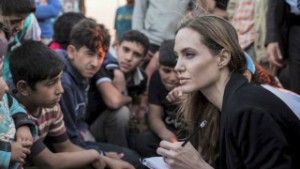
Angelina Jolie remembers Syria refugees
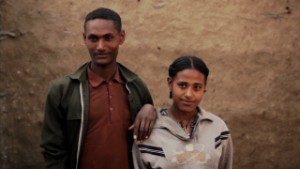
Saying no to child marriage
This dark underbelly of crisis has led to a disturbing growing phenomenon: "sutra" marriages, or marriages for protection.
Families who feel like they are unable to safeguard their female family members, their daughters, are marrying them off to protect them.
In a culture where conserving honor is central, everyone says they had no other choice.
In one trailer we meet 13-year-old Najwa. She curls back in the corner next to her husband, 19-year-old Khaled, and her mother, hardly saying a word.
Najwa is the youngest of three, her two older sisters in their late teens are also recently married.
"I swear I wasn't able to sleep, I was afraid for the girls." Her mother tells us. "I swear to God, I would not have let her get married this young if we were still in Syria."
"There were rapes," Khaled adds.
We approach the culturally delicate subject of sex with a vaguely worded question about the age difference and plans for children.
"It's okay, I do not want children now," Khaled says. "I will make it up to her, I will make up for not having a (wedding) party."
Ruwaida dresses brides inside Zaatari -- a business she had back home in Syria. She says that marriage at 13 was rare in Syria, but here she sees it more and more frequently.

Across the board, even for what should be a joyous occasion there is always sorrow. When the brides are children themselves, it's even worse.
"I feel like I have a child between my hands and she is having to take on a responsibility bigger than she is." Ruwaida says. "I feel like her life is over, her life is ending early."
The same fears exist for those families living outside the camp. On a tour with the Syrian American Medical Society (SAMS) we meet 14-year-old Eman. She has such a sweet young face, flushed with exhaustion as she cradles her baby.
"I wouldn't have gotten married, it's because of the situation." She speaks softly, her eyes filled with regret and pain well beyond her years.
"I told my son not to consummate the marriage, but he didn't listen," her mother-in-law whispers.
She too was wed for protection.
Farrah Sukkar, herself a Syrian refugee and SAMS volunteer, estimates there has been an increase of 60% in young teen marriages. The added worry not just because of the young age of the girls, but medical as well. Many are having children before their own bodies are fully developed.
The SAMS team goes house to house in Amman and other areas of Jordan trying to determine what aid refugees need, but also to pinpoint vulnerable cases.
One woman we meet has 13 children. Two of her daughters are teenagers and she's so afraid of leaving them at home alone that she hasn't been able to leave the house to vaccinate her baby.
Despite their best efforts, Syria's neighbours like Jordan can't handle the influx of refugees. Aid organizations are running out of funding.
Predators also lurk in areas where refugees are known to gather looking for humanitarian aid. Their desperation is palpable, with aid agencies both local and international unable to meet the needs, and they will latch on to anyone who promises help.
Mariam and her 10-year-old daughter were at a hospital providing free care for refugees when she overheard a man on the phone talking about free housing for refugees. She and the other women there clamored around him, thinking their prayers had been answered.
The man loaded three cars with women, including Mariam and her daughter. She quickly felt that something was wrong.
At their destination, a house in the city of Zarqa, a 45-minute drive from the capital, she refused to enter.
Another man came out, and pointing to her, told the driver, she recalls him saying: "Why did you bring me this one? You brought me an old lady. Then he pointed to the other ladies and asked, 'are you married?'"
Mariam began to feel increasingly terrified as she began to piece together exactly what this house was and asked the man for a glass of water, leaving her alone on the patio. She peered through the window.
"All the girls were scantily dressed." She remembers, her hands twisting nervously. "And I saw two men come in and pick two girls and walk out."
Horrified, she managed to flee with her daughter and the other women with her.
The international community may be unwilling or unable to end the conflict in Syria. But there is a solution to preventing the exploitation of the Syrian female refugee population: more aid.
"We left Syria to escape death and we found something worse than death" Mariam says, hugging her daughter close. "If we had stayed in Syria to die it would have been more honorable. There death is fast, here it is slow."
(CNN)

mercoledì 26 giugno 2013

Che valore ha la vita di un bambino?...

by 

26 giugno 2013 – Dar’à
Che valore ha la vita di un bambino? Per chi compie stragi di civili in Siria, evidentemente nessuno.
I bambini vengono arrestati, catturati… vengono torturati, uccisi.
Viene rubata la loro infanzia, la loro vita, persino la loro dignità dopo la morte.
Gettati a terra, faccia in giù; sui corpi esanimi polvere, sangue…
Non sono foglie trasportate dal vento e posate a terra; sono… sono stati BAMBINI.
Portati via all’amore della famiglia, che spesso non può neanche dare loro l’ultimo addio.
Che valore ha, allora, la loro vita?
Che valore hanno le nostre vite, la nostra presunta umanità?....

Siria:Talkalakh caduta in mano Hezbollah Lo riferiscono fonti della citta'. Tv Stato conferma...

(ANSA) - BEIRUT, 26 GIU - Gli Hezbollah libanesi hanno conquistato nelle ultime ore assieme alle milizie fedeli al presidente Bashar al Assad la cittadina siriana di Talkalakh, roccaforte dei ribelli a ovest di Homs. Lo riferisce all'ANSA Talha Kleib, coordinatore degli attivisti della citta'. La tv di Stato siriana ha confermato la notizia, affermando che l'esercito governativo di Damasco ha riportato la calma e la sicurezza nella cittadina....

Enkhel-Dara'a:...effetti dei bombardamenti...

Effetti di un bombardameto a Daraa...tra i morti 4 bambini sotto i 12 anni...

US troops in Jordan 'a signal to Syria'...

               
                US soldiers were among thousands taking part in Operation Eager Lion
Hundreds of US troops are now stationed in Jordan, many remaining on after a joint military exercise. Their presence sends a message to neighbouring Syria, but as the BBC's Quentin Sommerville reports from Amman, it has stirred some unease in Jordan itself.
Attack helicopters flew low over the desert in Quweira in northern Jordan, swiftly destroying targets in the sand, while F16 and Harrier jump-jets provided back up.
A considerable show of force, Operation Eager Lion had more than 8,000 men and women taking part from more than 19 countries.
American and Jordanian troops were in the thick of the action.
This 12-day annual exercise was as realistic as war-gaming gets: the rounds being fired were live.
But despite the war in neighbouring Syria, Admiral Bill Nasher, one of the American commanders, insisted that this was a routine exercise.
"The regional security to tends to ebb and flow. Our view is that our consistent enduring presence here is what really helps stabilise that," he said.
"As the tensions ebb and flow, our focus is to really just work well with the Jordanians."
Combat-ready
It is the third time the exercise has been held in Jordan. Adm Nasher said this year it was smaller than last. He was sticking to a script that this was business as usual. He would not be drawn on the perceived threat from Syria. "That's not on my radar screen," he said.
Only 150km (93 miles) from the Syrian capital, Jordan is of vital strategic importance should a no-fly zone be established, or other military action taken against Syrian President Bashar al-Assad. A clear message was being sent to Damascus: heavy weaponry is close at hand.
Patriot missiles and an unspecified number of F16 fighter jets had already been sent to Jordan before Operation Eager Lion began in mid-June.
Some 700 American troops have stayed behind, and they are combat-ready. They join the 100-plus US soldiers who are already in the country advising Jordan's armed forces on its deployment to Afghanistan.
A Jordanian demonstrator holds a banner during a protest in Amman in April 2013 against an American troop deployment in Jordan.Protests have taken place in Amman against US troop deployment in Jordan
For some like former Jordanian Army Brigadier General Ali Habashna, their presence is drawing Jordan further into danger.
"We all know that when the US puts its troops somewhere, in a country, they become part of the crisis, they worsen it," he said.
"An example of that was Afghanistan and Iraq. The presence of US soldiers right now in Jordan, given the tension in the region and Syria, is very dangerous for Jordan."
There were small protests on the streets of Amman last week attacking President Assad, the Iranian-backed militia Hezbollah and the increasing numbers of American soldiers of Jordanian soil.
For some like Jordanian pro-democracy activist Omar Abu Rassa, the international community should be tackling President Assad directly.
"We think that the West generally and the United States specifically, if they want to be positive to our area, they have to finish the conflict inside Syria by supporting the Syrian Free Army, not by bringing the soldiers to our country."
The war games finished with special forces taking to the sea. Jordanian and American troops descended on to a passenger ferry from Blackhawk helicopters. High speed boats tackled the ship from the side. The scenario was a hostage situation.
US President Barack Obama says the extra troops will leave Jordan when the security situation improves - but no-one expects that to happen anytime soon...
(BBC News Middle East)

Syria: Detention and Abuse of Female Activists Women Detail Torture and Abuse by Government in New Testimonies...

Beyond the daily gun battles, women have been a powerful voice in the opposition in villages and towns across Syria. In response, the Syrian government is punishing women for delivering humanitarian assistance, participating in protests, and supporting the opposition by subjecting them to detention, torture, and sexual assault.
Liesl Gerntholtz, women’s rights director
(New York) – Syrian military and pro-government forces known as shabiha have arbitrarily detained female opposition activists as well as female relatives and neighbors of pro-opposition activists and fighters, and in a number of cases, subjected them to torture and sexual abuse.

Human Rights Watch interviewed 10 Syrian women who were detained, either due to their own engagement in activities related to government opposition, or that of their family members. Eight were themselves activists who had been detained, all of whom said that security forces and shabiha had abused or tortured them in detention. The abuse included electric shocks, keeping them in stress positions, and using metal rods, wires and nightsticks to beat and torture them. The eight women had attended peaceful demonstrations, created posters for opposition groups, provided humanitarian aid and medical care to those affected by the conflict, transported defectors from the Syrian military, and assisted displaced Syrians. All said security forces detained them at checkpoints or during home raids, and held them for periods lasting up to nearly 14 months between February 2012 and April 2013. In two cases, the women said their captors raped them while they were detained at the Military Intelligence Branch in Tartous, and the Air Force Intelligence Branch in Mezze, Damascus.

Human Rights Watch also interviewed two women who were detained, and five who were physically abused, by government forces simply because of the suspected association of their relatives or neighbors with pro-opposition forces.

Human Rights Watch has not received information about opposition forces detaining and mistreating female government supporters or relatives of those associated with government forces.

“Beyond the daily gun battles, women have been a powerful voice in the opposition in villages and towns across Syria,” said Liesl Gerntholtz, women’s rights director at Human Rights Watch. “In response, the Syrian government is punishing women for delivering humanitarian assistance, participating in protests, and supporting the opposition by subjecting them to detention, torture, and sexual assault.”

All 10 of the former detainees interviewed were arrested and detained arbitrarily, Human Rights Watch said. Eight of the women were held solely for activities related to their support of government opposition, including participating in peaceful protests, providing humanitarian assistance, and aiding Syrian army defectors and wounded opposition fighters. In two cases, women were detained solely due to their relatives’ activities in opposition to the government.  Former detainees said that security forces conducting the arrests did not identify themselves, provide legal justification for arrests, inform the women of the charges against them, or tell them where they were being taken. One former detainee was held for about three months in pretrial detention, violating both international legal standards and legislation passed by the Syrian government, in April 2011, that limits detention without judicial review to 60 days.

The women reported torture in the following detention facilities: the Military Intelligence Branch in Tartous, the Military Intelligence Branch 215 in Damascus, the Military Intelligence Branch in Daraa, and Adra central prison in Damascus. Human Rights Watch has previously documented the government’s use of torture in 27 detention centers throughout Syria, including in these facilities.

Fatmeh (all names have been changed to protect interviewees), a 35-year-old activist who helped transport Syrian army defectors from Homs to Deraa, told Human Rights Watch that she was tortured every day during a 15-day stretch in detention at Military Intelligence Branch 215 in Damascus, in March 2012:
One day it would be by electricity, the next by shabeh [being hung from the ceiling by one’s wrists with feet dangling or barely touch the ground]. The torture marks are still present. I would lose consciousness with the electricity… [T]hey were hitting me on my lower legs below my thighs and on my back. They tortured me until my body started bruising … Two men took me and carried me to the toilet because I couldn’t walk.
Fatmeh was released in March 2013, after nearly 14 months’ detention.

All eight women activists interviewed by Human Rights Watch said that security forces detained them because of their pro-opposition activities. They said that security forces interrogated them about their own involvement with pro-opposition groups, and asked them for names, locations, and activities of friends, relatives, and other suspected opposition supporters. Nasrin, 25, was detained in Daraa in February 2012, while helping to transport a Syrian army defector. She told Human Rights Watch that her interrogators asked about the identity of a Free Syrian Army leader in her village, and promised her release in exchange for his name.

Six of the women said that the authorities charged them with “terrorism” or “terrorist activities,” but released them after months in detention without adequate due process – including judges who refused to examine their case files based on instruction from security divisions, and who remanded them to prison for extended periods of time without instruction or ruling.

“National Security has looked over your file and we can’t do anything,” a judge in Damascus said to one of the women. “No one is allowed to see your file. You can’t be released by a judge.”

A legal counselor in Damascus told Human Rights Watch that she is currently assisting 15 female detainees held at Adra central prison, following their transfer from security branches in governorates including Idlib, Daraa, and Damascus:
Most of the women have been arrested during the revolution because of their own activities – demonstrating, providing humanitarian assistance or medical assistance, even [for just] being active on the Internet or Facebook ... They are being charged with helping or working with an armed group, as terrorists – but it is not true.
She said that her clients have reported that some 150 women are currently held at Adra, a number corroborated by two former detainees interviewed by Human Rights Watch. Based on her work with female detainees since the start of the Syrian uprisings, the legal counselor believes that the majority of these women are being detained for political participation and activities in support of opposition groups. The Violations Documentation Center in Syria estimates that the Syrian government detained more than 5,400 women between March 2011 and April 2013; they estimate that 766 women and 34 girls under age 18 remain in government detention facilities. According to the Syrian Network for Human Rights (SNHR), 24 female detainees have been tortured to death since March 2011. Human Rights Watch is unable to independently verify the number of female detainees or those who have died in detention, because of denial of access to detention facilities in Syria.
Two of the former detainees reported to Human Rights Watch that security forces and prison guards raped and sexually abused them while in detention. Amal, 19, told Human Rights Watch that she was raped on two different occasions: first by an investigator and two officers in October 2012, at the Military Intelligence Branch in Tartous, and a second time by two officers in the Military Intelligence Branch 235 (Palestine Branch) in Damascus, in November 2012. Maysa, 30, told Human Rights Watch about being beaten, threatened with torture, and raped on two separate occasions in June 2012, by a security officer while she was detained in the Investigation Branch at Air Force Intelligence in Mezze, Damascus. After the first rape, Maysa reported the attack to a commanding officer who was interrogating her. The officer slapped the attacker in front of Maysa after she identified him as the perpetrator of the rape, but did not remove him from his post. Maysa told Human Rights Watch that the attacker raped her again the following evening. On two other occasions, in July 2012, a prison guard at the same branch forced Maysa to perform oral sex on him. Brigadier General Abdul Salam Fajr Mahmoud is the director of the Investigation Branch at this facility.

Human Rights Watch has previously identified the locations, agencies responsible, torture methods, and, in many cases, commanders who were in charge of the 27 detention facilities run by Syrian intelligence agencies where the organization has documented torture. Human Rights Watch has documented systematic patterns that point to a state policy of torture and ill-treatment, and therefore constitute a crime against humanity. Human Rights Watch has also previously documented the use of sexual violence by Syrian security forces against male and female detainees in more than 20 incidents. The degree to which sexual violence is used in detention remains unclear, due to lack of access to detention facilities by human rights monitors and the reticence of many victims to come forward for fear of stigma or reprisals.

Human Rights Watch does not have evidence that high-ranking officers commanded their troops to commit sexual violence in detention, or that sexual violence is widespread and systematic in government detention facilities. However, information received by Human Rights Watch indicates that commanding officers in most cases took no action to investigate or punish those committing acts of sexual violence, or to prevent them from committing such acts. This was despite the assaults taking place in circumstances in which commanding officers knew or should have known the crimes were occurring. In the one case documented by Human Rights Watch where officers appeared to punish a perpetrator through physical violence – the case of Maysa – these actions were inadequate in protecting the detainee from abuse. In no case is there evidence to suggest that perpetrators were prosecuted for their crimes.

Human Rights Watch calls for the immediate release of all nonviolent activists and detainees held arbitrarily, including those detained for opposition activity or suspected activity of relatives. Human Rights Watch has repeatedly called on the United Nations Security Council to demand that Syrian authorities grant unrestricted access to all detention facilities for international monitors, including the Commission of Inquiry mandated by the UN Human Rights Council. Internationally recognized, trained human rights monitors must be permitted and equipped to investigate arbitrary detention, torture, and sexual abuse of both men and women. Human Rights Watch reiterates its call to the UN Security Council to refer Syria to the International Criminal Court (ICC), and urges other countries to join the calls for accountability by supporting a referral to the ICC as the forum most capable of effectively investigating and prosecuting those bearing the greatest responsibility for abuses in Syria.

Human Rights Watch continues to call on international nongovernmental organizations, humanitarian assistance providers, the United Nations, and local organizations to develop, expand, and improve access to medical, psychological, social, and legal assistance to Syrian female victims of torture, including sexual assault, inside and outside of the country.

“Torture and attacks against female activists have gone on for more than two years, and the Syrian authorities continue to turn a blind eye,” Gerntholtz said. “The Syrian government must immediately stop abusing female activists and put in measures to protect them. Those who have committed these crimes must be held accountable.”